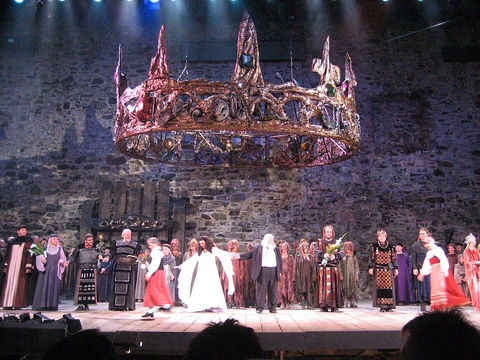
Montserrat Caballé
Spanish soprano renowned for pure voice and bel canto mastery.

Montserrat Caballé was a Spanish (Catalan) operatic soprano, widely considered one of the greatest sopranos of the 20th century. She performed a wide variety of roles over a six-decade career, winning three Grammy Awards and numerous other musical awards. Her voice was described as pure but powerful, with superb control of vocal shadings and exquisite pianissimo.
- born
- 12 April 1933
- died
- 6 October 2018
- field
- Operatic soprano
- nationality
- Spanish (Catalan)
- known_for
- Exponent of Verdi and bel canto repertoire; 1965 Carnegie Hall debut in Lucrezia
Verified Timeline
Lore & Background
Caballé was born in Barcelona on 12 April 1933 into a family of humble financial circumstances due to the Civil War. She studied at the Liceu Conservatory, graduating with a gold medal in 1954, and made her professional debut in 1956 as a last-minute replacement as Mimì in Puccini's La bohème in Basel. She was part of the Basel Opera company from 1957 to 1959 and then at the Bremen Opera from 1959 to 1962. In 1962 she returned to Barcelona and debuted at the Liceu in Strauss's Arabella, followed by a tour of Mexico and further appearances at the Liceu in 1963. Her international breakthrough came in 1965 when she replaced a pregnant Marilyn Horne in a semi-staged performance of Donizetti's Lucrezia Borgia at Carnegie Hall, earning a 25-minute standing ovation. That year she also debuted at the Glyndebourne Festival and the Metropolitan Opera. Over the following decades she appeared at leading opera houses worldwide, including La Scala, Covent Garden, the Bolshoi Theatre, and the San Francisco Opera, singing roles by Verdi, Bellini, Donizetti, Puccini, and Strauss. Her voice was noted for its purity, precise control, and power, with superb control of vocal shadings and exquisite pianissimo.
Reader's Guide
Montserrat Caballé's significance lies in her exceptional vocal technique and her central role in reviving the bel canto repertoire in the mid-20th century. Her 1965 Carnegie Hall debut as Lucrezia Borgia, learned in less than a month, established her as a major international artist. She was particularly admired for her pure but powerful voice, exquisite pianissimos, and control of vocal shadings, though less noted for dramatic acting. Her six-decade career included performances at the world's foremost opera houses and three Grammy Awards. Beyond opera, she is widely known for her 1987 duet with Freddie Mercury, 'Barcelona,' which became an official theme for the 1992 Olympic Games. Her legacy endures through her recordings, including the title role in Bellini's Norma and the role of Adalgisa opposite Joan Sutherland, as well as her influence on later sopranos.
Did You Know?
- Caballé earned a 25-minute standing ovation after her 1965 Carnegie Hall debut as Lucrezia Borgia, a role she learned in less than a month.
- During a 1965 Glyndebourne performance of Der Rosenkavalier, she asked a fellow singer for a cognac onstage, turned her back on the audience, drained the glass, and continued her role.
- She recorded the role of Adalgisa in Bellini's Norma opposite Joan Sutherland in 1984, one of few sopranos to do so, though she was over age 50 at the time.
- Her 1987 duet with Freddie Mercury, 'Barcelona,' became an official theme song for the 1992 Olympic Games in her native city.
- In 1974, she underwent major surgery to remove a large benign mass from her abdomen and was performing again by early 1975.
Frequently Asked Questions
Who is Montserrat Caballé?
Montserrat Caballé (12 April 1933 – 6 October 2018) was a Catalan-born Spanish soprano whose career stretched across roughly six decades. She is widely regarded as one of the finest sopranos of the twentieth century, celebrated for the purity and clarity of her instrument.
Which operatic roles is Montserrat Caballé most famous for?
She was particularly renowned as an interpreter of Verdi and the bel canto tradition, bringing a luminous, effortless quality to roles that demanded both lyricism and dramatic range. Her 1965 Carnegie Hall debut as Lucrezia Borgia became a landmark moment in her career.
What is the story behind Montserrat Caballé and Freddie Mercury's 'Barcelona'?
In 1987, Caballé joined forces with Queen frontman Freddie Mercury to record the song 'Barcelona,' which was later adopted as the theme for the 1992 Summer Olympics held in her home city. The collaboration remains one of the most recognizable crossover moments in classical music history.
How many Grammy Awards did Montserrat Caballé win?
Over the course of her long recording career, Caballé collected three Grammy Awards in addition to a wide array of other international music prizes. These honors reflected her consistent critical and popular acclaim across multiple decades.
What made Montserrat Caballé's voice stand out among other sopranos?
Critics and fellow singers frequently singled out the exceptional purity and evenness of her tone, which allowed her to navigate the demands of bel canto ornamentation with apparent ease. This vocal clarity, combined with her deep musicality, set her apart as a reference point for the lyric soprano tradition.
More in Opera Singers 1-24
Related in Opera Singers
Links follow this subject's own source article.
Elsewhere in the Opera Singers universe
Spotted an error? Know more?
This is a living reference — every entry is fact-audited, and reader corrections feed straight into our audit queue. Suggest an edit · See this site's audit record