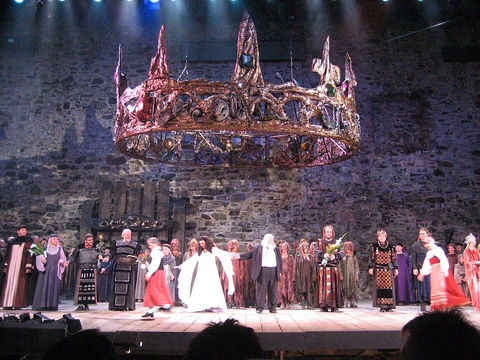
José Carreras
Spanish operatic tenor, one of the Three Tenors, and founder of the José Carreras International Leukaemia Foundation.

José Carreras is a Spanish operatic tenor known for his performances in the operas of Donizetti, Verdi, and Puccini. He gained worldwide fame as one of the Three Tenors, alongside Plácido Domingo and Luciano Pavarotti, in a series of large concerts from 1990 to 2003. Born in Barcelona on 5 December 1946, he made his operatic debut at age 11 as Trujamán in Manuel de Falla's *El retablo de Maese Pedro* at the Gran Teatre del Liceu. His career encompassed over 60 roles, and he is also known for his humanitarian work as president of the José Carreras International Leukaemia Foundation, which he established after his own recovery from acute lymphoblastic leukemia in 1988.
- born
- 5 December 1946
- field
- Operatic tenor
- nationality
- Spanish
- known_for
- Three Tenors concerts, humanitarian work, leukemia foundation
Verified Timeline
Lore & Background
Carreras showed an early talent for music, which intensified at age six when he saw Mario Lanza in *The Great Caruso*. After the film, he sang arias incessantly, especially 'La donna è mobile,' often locking himself in the family's bathroom when his family became exasperated. At age eight, he gave his first public performance, singing 'La donna è mobile' on Spanish National Radio, accompanied by Magda Prunera on piano. On 3 January 1958, at age eleven, he made his debut at Barcelona's Gran Teatre del Liceu as the boy soprano Trujamán in *El retablo de Maese Pedro*. His first principal adult role was Gennaro in Donizetti's *Lucrezia Borgia* on 19 December 1970, with Montserrat Caballé, who became a key supporter. By age 28, he had sung the tenor lead in 24 different operas and had an exclusive recording contract with Philips, resulting in recordings of less-performed Verdi operas like *Il Corsaro*, *I due Foscari*, *La battaglia di Legnano*, *Un giorno di regno*, and *Stiffelio*. In 1986, he portrayed the 19th-century Spanish tenor Julián Gayarre in the film *Romanza Final*.
Reader's Guide
Carreras's significance lies in his extensive operatic career spanning over 60 roles and his role in popularizing opera through the Three Tenors concerts, which began in 1990 at the Baths of Caracalla in Rome, originally conceived to raise money for his leukemia foundation. He also established the José Carreras International Leukaemia Foundation after his own recovery from acute lymphoblastic leukemia in 1988, following treatment involving chemotherapy, radiation therapy, and an autologous bone marrow transplant at the Fred Hutchinson Cancer Research Center in Seattle. His legacy includes recordings of less-performed Verdi operas and collaborations with conductors like Herbert von Karajan, with whom he first sang in the Verdi Requiem at Salzburg on 10 April 1976. His final operatic performances at the Gran Teatre del Liceu were in *Samson et Dalila* in March 2001.
Did You Know?
- Carreras made his operatic debut at age 11 as Trujamán in Manuel de Falla's *El retablo de Maese Pedro* at the Gran Teatre del Liceu.
- He studied chemistry at the University of Barcelona for two years before leaving to concentrate on singing.
- During the filming of *La Bohème* in Paris, he was diagnosed with acute lymphoblastic leukemia and given a 1-in-10 chance of survival.
- The first Three Tenors concert in 1990 was originally conceived to raise money for Carreras's leukemia foundation.
- He recorded the Argentine folk mass *Misa Criolla* in 1987, conducted by its composer Ariel Ramírez, bringing the work to a worldwide audience.
Frequently Asked Questions
Who is José Carreras?
He is a Spanish operatic tenor born in December 1946 who became one of the most widely recognized voices in classical music. He is celebrated for his interpretations of roles in works by Donizetti, Verdi, and Puccini, and for his partnership in the Three Tenors concerts.
What are the Three Tenors and how did Carreras become part of them?
The Three Tenors is the trio of José Carreras, Plácido Domingo, and Luciano Pavarotti who performed together in large-scale concerts from 1990 through 2003. The group brought operatic singing to enormous global audiences and became a defining cultural moment for classical music.
What happened with José Carreras's health?
Carreras was diagnosed with acute leukemia in 1987, which forced him to step away from performing for several years. After his recovery, he channeled that experience into a lifelong commitment to raising awareness and funding research for the disease.
What operas is José Carreras most associated with?
His core repertoire centers on the great Italian tenor roles in operas by Donizetti, Verdi, and Puccini. He is particularly celebrated for portrayals such as Don José in Carmen, Radamès in Aida, and Cavaradossi in Tosca.
What is the Carreras Foundation?
It is a humanitarian organization he established to support leukemia research and patient care. The foundation grew directly out of his own battle with the disease in the late 1980s and remains a major part of his legacy beyond the stage.
More in Opera Singers 1-24
Related in Opera Singers
Links follow this subject's own source article.
Elsewhere in the Opera Singers universe
Spotted an error? Know more?
This is a living reference — every entry is fact-audited, and reader corrections feed straight into our audit queue. Suggest an edit · See this site's audit record