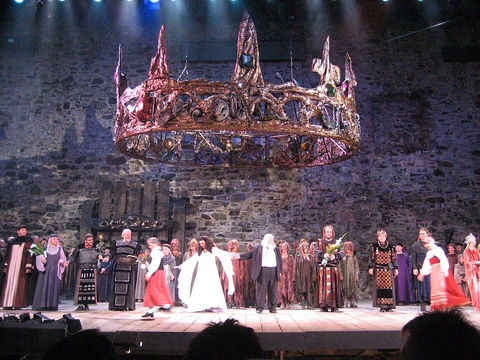
Christa Ludwig
German mezzo-soprano with a career spanning almost half a century, from the late 1940s until the early 1990s.
Christa Ludwig (16 March 1928 – 24 April 2021) was a German mezzo-soprano who also occasionally performed as a dramatic soprano. She was highly regarded for her work in opera, lieder, oratorio, and large-scale religious compositions such as masses, passions, and symphonic solos. Her career on stage lasted from the late 1940s into the early 1990s, nearly fifty years. She appeared at major opera houses and festivals worldwide, most notably at the Vienna State Opera, where she was a regular from 1955 to 1994, and at the Metropolitan Opera, where she took on many roles. She is best known for portraying Mozart’s Dorabella, Beethoven’s Leonore in *Fidelio*, Wagner’s Kundry, and both Octavian and the Marschallin in Richard Strauss’s *Der Rosenkavalier*.
Born in Berlin, Ludwig came from a musical family. Her father, Anton Ludwig, started as a baritone before moving to tenor roles and also worked as an opera administrator. Her mother, Eugenie Besalla-Ludwig, was a mezzo-soprano who sang at the Aachen Opera under Herbert von Karajan. Ludwig grew up in Aachen, where her mother gave her first voice lessons. At age eight, she sang the Queen of the Night’s aria from Mozart’s *The Magic Flute*. She studied piano, cello, flute, and music theory at the Aachen Conservatory. After their home was bombed in 1944, the family moved to Hanau, and she later studied voice at the Musikhochschule Frankfurt.
Ludwig made her stage debut in 1946 at age 18, singing Orlovsky in Johann Strauss’s *Die Fledermaus* at the Oper Frankfurt, where she stayed until 1952. She then joined the Staatstheater Darmstadt from 1952 to 1954, followed by a season at the Staatsoper Hannover in 1954–55. In 1955, she became a member of the Vienna State Opera, where she was named Kammersängerin in 1962 and performed 43 roles in 769 appearances over more than three decades. Her Salzburg Festival debut came in 1954 as Cherubino in Mozart’s *The Marriage of Figaro*, conducted by Karl Böhm, and she returned regularly until 1981. At the Vienna State Opera, she created the title role in Gottfried von Einem’s *Der Besuch der alten Dame* on 23 May 1971, with Horst Stein conducting and Eberhard Waechter as her lover Alfred Ill; Deutsche Grammophon recorded the performance, later reissued on CD by Amadeo and Orfeo.
Her first U.S. appearance was at the Lyric Opera of Chicago in 1959, singing Dorabella in Mozart’s *Così fan tutte*. That same year, she debuted at the Metropolitan Opera as Cherubino in *The Marriage of Figaro*, conducted by Erich Leinsdorf. Critic Louis Biancolli of the *World Telegram and Sun* praised her as a “valuable acquisition” with a “bright, warm voice,” noting her precise, even singing and lively portrayal. She went on to sing 121 performances in 15 roles at the Met, quickly becoming a favorite. Her next role there was Octavian in *Der Rosenkavalier*, in a live broadcast with Leinsdorf, Lisa Della Casa as the Marschallin, Elisabeth Söderström as Sophie, and Oskar Czerwenka as Ochs. Her Met repertoire also included the Dyer’s Wife in the company’s first performances of *Die Frau ohne Schatten*, the Marschallin, Klytemnestra in *Elektra*, Ortrud in *Lohengrin*, Brangäne in *Tristan und Isolde*, Fricka in *Das Rheingold* and *Die Walküre*, Waltraute in *Götterdämmerung*, Kundry in *Parsifal*, the title role in *Fidelio*, Didon in *Les Troyens*, Charlotte in *Werther*, and Amneris in *Aida*. In 1960, she recorded Adalgisa alongside Maria Callas as Bellini’s *Norma* for EMI. She first sang at the Bayreuth Festival in 1966 as Brangäne in *Tristan und Isolde*, and made her Royal Opera House debut in 1968 as Amneris in *Aida*.
As her voice matured, Ludwig moved from lyric and spinto mezzo roles to dramatic ones. Her wide repertoire eventually included Princess Eboli in *Don Carlo* (at La Scala, Salzburg, and Vienna), the title role in *Carmen*, Ulrica in *Un ballo in maschera*, Octavia in Monteverdi’s *L’incoronazione di Poppea*, and contemporary parts by von Einem and Orff. She briefly took on spinto and dramatic soprano roles, such as Lady Macbeth in *Macbeth*, the Dyer’s Wife, the Marschallin, and Leonore in *Fidelio*. Beyond opera, she regularly gave lieder recitals with pianists like Sebastian Peschko, Gerald Moore, Geoffrey Parsons, and occasionally Leonard Bernstein. She performed as a soloist with orchestras, covering works by Schubert, Schumann, Brahms, Wolf, Mahler, and Strauss, and was one of the few women to record Schubert’s *Winterreise*. She also sang Bach’s music, recording major works such as the *St Matthew Passion* (conducted by Otto Klemperer in 1961, with Peter Pears as the Evangelist and Dietrich Fischer-Dieskau as the voice of Christ) and the *Mass in B minor* that same year.
- born
- 16 March 1928
- died
- 24 April 2021
- field
- Mezzo-soprano and dramatic soprano
- nationality
- German
- known_for
- Opera, lieder, oratorio, and religious works; roles including Dorabella, Leonore
Lore & Background
Ludwig was born in Berlin to a musical family. Her father, Anton Ludwig, began his singing career as a baritone and later moved into the tenor repertory, and was also an opera administrator. Her mother, Eugenie Besalla-Ludwig, was a mezzo-soprano who sang at the Aachen Opera during Herbert von Karajan's period as conductor. Ludwig grew up in Aachen, where her first voice teacher was her mother. At age eight, she sang an aria of the Queen of the Night in Mozart's *The Magic Flute*. At Aachen Conservatory, she studied piano, cello, flute and music theory. The family moved to Hanau when their home was bombed in 1944. She studied voice at the Musikhochschule Frankfurt. Ludwig made her stage debut in 1946 at the age of 18 as Orlovsky in *Die Fledermaus* by Johann Strauss at the Oper Frankfurt, where she sang until 1952. She was a member of the Staatstheater Darmstadt from 1952 to 1954, then sang for the 1954/55 season at the Staatsoper Hannover. She joined the Vienna State Opera in 1955, where she became one of its principal artists and was awarded the title Kammersängerin in 1962. She performed with the company for more than thirty years in 43 opera roles and 769 performances. In 1954, she made her debut at the Salzburg Festival as Cherubino in Mozart's *The Marriage of Figaro*, conducted by Karl Böhm, and appeared there regularly until 1981. At the Vienna State Opera, she created the title role of Gottfried von Einem's *Der Besuch der alten Dame* on 23 May 1971, conducted by Horst Stein and alongside Eberhard Waechter as her lover Alfred Ill. The performance was recorded by Deutsche Grammophon, and reissued on CD by Amadeo and later Orfeo.
Reader's Guide
Ludwig first performed in the U.S. at the Lyric Opera of Chicago as Dorabella in Mozart's *Così fan tutte* in 1959. The same year, she appeared at the Metropolitan Opera (Met) in New York City as Cherubino in *The Marriage of Figaro*, conducted by Erich Leinsdorf. Louis Biancolli wrote in his review for the *World Telegram and Sun*: '... the new Cherubino – Berlin-born Christa Ludwig, a leading mezzo at Darmstadt, Salzburg and Vienna since her debut as Prince Orlofsky in "Fledermaus" in 1946. She is a valuable acquisition. Gifted with a bright, warm voice; Miss Ludwig was a lively and believable Cherubino. Her singing was precise and even, each tone clear and true, and her Italian rippled along like a second music. The ovation was fully deserved.' She subsequently sang 121 performances in 15 roles with the Met. Her repertoire there included The Dyer's Wife in the Met's first performances of *Die Frau ohne Schatten* by Richard Strauss, then (in 1969) the Marschallin in *Der Rosenkavalier*, Klytemnestra in *Elektra*, Ortrud in Wagner's *Lohengrin*, Brangäne in *Tristan und Isolde*, Fricka in both *Das Rheingold* and *Die Walküre*, Waltraute in *Götterdämmerung*, Kundry in *Parsifal*, the title role in Beethoven's *Fidelio*, Didon in *Les Troyens* by Berlioz, Charlotte in Massenet's *Werther*, and Amneris in Verdi's *Aida*. In 1960, she performed as Adalgisa alongside Maria Callas as Bellini's *Norma* for an EMI recording. She appeared at the Bayreuth Festival first as Brangäne in *Tristan und Isolde* in 1966. She first appeared at the Royal Opera House in London in 1968 as Amneris in Verdi's *Aida*. In addition to her opera performances, Ludwig regularly gave recitals of lieder, with pianists including Sebastian Peschko, Gerald Moore, Geoffrey Parsons and on occasion Leonard Bernstein. She was one of few women to tackle and record Schubert's *Winterreise*. Her final live operatic performance was as Klytemnestra in *Elektra* for the Vienna State Opera in December 1994.
Did You Know?
- At age eight, Ludwig sang an aria of the Queen of the Night in Mozart's *The Magic Flute*.
- She performed 769 performances in 43 opera roles at the Vienna State Opera over more than thirty years.
- She created the title role of Gottfried von Einem's *Der Besuch der alten Dame* at the Vienna State Opera on 23 May 1971.
- She was one of few women to tackle and record Schubert's *Winterreise*.
- Her final live operatic performance was as Klytemnestra in *Elektra* for the Vienna State Opera in December 1994.
Frequently Asked Questions
Who is Christa Ludwig?
Christa Ludwig was a German classically trained singer who worked primarily as a mezzo-soprano but also took on dramatic soprano parts. She was active on the international stage from the late 1940s through the mid-1990s, appearing in opera, lieder, oratorio, and major religious compositions.
What are Christa Ludwig's most iconic roles?
She is particularly remembered for her portrayals of Dorabella, Leonore, Kundry, Octavian, and the Marschallin. These parts showcased both the depth of her mezzo voice and her ability to shift into the higher dramatic soprano register when a role demanded it.
What was Christa Ludwig's vocal classification?
She was classified as a mezzo-soprano who could also perform in the dramatic soprano range. This dual capability let her cover a wide swath of the German and Austrian operatic repertoire.
Which major opera houses did Christa Ludwig sing at?
Her career took her to top-tier venues around the world, most notably the Vienna State Opera and New York's Metropolitan Opera. These two houses were central to her professional life over nearly fifty years of performing.
When did Christa Ludwig die and how old was she?
She passed away on 24 April 2021, at the age of 93. She had been born on 16 March 1928 in Germany, giving her a performing career that stretched close to half a century.
More in Opera Singers 1-24
Related in Opera Singers
Links follow this subject's own source article.
Spotted an error? Know more?
This is a living reference — every entry is fact-audited, and reader corrections feed straight into our audit queue. Suggest an edit · See this site's audit record