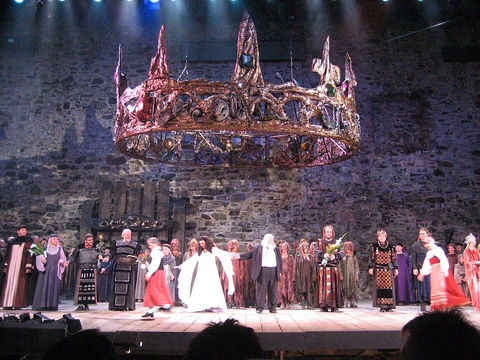
Cecilia Bartoli
Italian mezzo-soprano known for Baroque and Classical repertory.
Cecilia Bartoli (born 4 June 1966) is an Italian mezzo-soprano best known for her interpretations of Bellini, Handel, Mozart, Rossini, and Vivaldi, along with lesser-known Baroque and Classical works. She has also performed soprano and alto roles. Her voice has an unusual timbre; in 2001, Nicholas Wroe described its "fully developed sumptuousness of the lower register, the vibrancy of the middle range...the top was limpid and powerful." She has remained one of the most prominent opera stars in recent decades.
Bartoli was born in Rome to professional singers Silvana Bazzoni and Pietro Angelo Bartoli, who gave her first music lessons. She made her public debut at age nine, playing the shepherd boy in *Tosca*. Later, she studied at Rome’s Conservatorio di Santa Cecilia. At 19, she appeared on the Italian TV show *Fantastico*; though she didn’t win, she was invited to sing with the Paris Opera in a concert honoring Maria Callas.
Her professional opera debut came in 1987 at the Arena di Verona. The next year, she performed Rosina in *The Barber of Seville* at the Cologne Opera, the Schwetzingen Festival, and the Zurich Opera, earning strong reviews. Working with conductors Daniel Barenboim and Nikolaus Harnoncourt, she focused on Mozart roles such as Zerlina in *Don Giovanni* and Dorabella in *Così fan tutte*, and her career went international. In 1990, she debuted at the Opéra Bastille as Cherubino in *The Marriage of Figaro* and at the Hamburg State Opera as Idamantes in *Idomeneo*. Her 1991 La Scala debut as Isolier in *Le comte Ory* cemented her reputation as a leading Rossini singer.
She debuted at the Metropolitan Opera in 1996 as Despina in *Così fan tutte*, returning in 1997 for the title role in *La Cenerentola* and in 1998 as Susanna in *The Marriage of Figaro*. In 2000, she sang Donna Elvira in *Don Giovanni* at the Deutsche Oper Berlin. Her long-awaited Royal Opera House debut came in 2001, playing Euridice and the Genio in the London premiere of Haydn’s *L'anima del filosofo*. She is a foreign member of the Royal Swedish Academy of Music.
Beyond Mozart and Rossini, Bartoli has devoted much of her career to Baroque and early Classical music by Gluck, Vivaldi, Haydn, and Salieri. In early 2005, she sang Cleopatra in Handel’s *Giulio Cesare*, often performing with the Baroque ensemble Il Giardino Armonico. In 2012, she produced *Mission*, premiering works by the lesser-known Baroque composer Agostino Steffani, along with a CD and an extended performance video set in the Palace of Versailles, noted for its period accuracy in performance, setting, wardrobe, and cinematography. She performed the Olympic Hymn at the 2026 Winter Olympics opening ceremony in Milan’s San Siro stadium.
In 2007–08, she studied and recorded early 19th-century bel canto repertoire, focusing on singer Maria Malibran for the 200th anniversary of her birth. The album *Maria* was released in September 2007. In May 2008, she sang the title role of Halévy’s *Clari*—written for Malibran—in a revival at the Zurich Opera. In June 2010, she first sang the title role of Bellini’s *Norma* in a concert with Thomas Hengelbrock at the Konzerthaus Dortmund. In March 2011, she toured five Australian cities with programs from *Sacrificium* and *Maria*.
In 2012, Bartoli became artistic director of the Salzburg Whitsun Festival. She moved away from academic programming, instead organizing beautiful programs and inviting great artists, which led to record ticket sales and put the festival on the international opera calendar. She sang Cleopatra in *Giulio Cesare* (2012), the title role in *Norma* (2013), and Rossini’s *La Cenerentola* (2014). In December 2019, it was announced she would succeed Jean-Louis Grinda as director of the Opéra de Monte-Carlo, effective 1 January 2023, becoming the first woman in that role.
Bartoli lives with her husband, Swiss bass-baritone Oliver Widmer, in Zollikon, Switzerland, and part of the year in Rome. They married in 2011 after twelve years together. She lived in Monaco in the early 2010s.
She was appointed Chevalier of the French Ordre des Arts et des Lettres (1995) and Commander of Monaco’s Order of Cultural Merit (November 1999). In 2003, she received the Brit Award for Outstanding Contribution to Music at the Classic Brit Awards. In 2010, she was awarded an honorary Doctor of Music degree from University College Dublin. In 2011, she won a fifth Grammy for Best Classical Vocal Performance for *Sacrificium*. In 2012, she was inducted into *Gramophone*’s Hall of Fame and received the Herbert von Karajan Music Prize.
- born
- 4 June 1966
- field
- Opera singer (mezzo-soprano)
- nationality
- Italian
- known_for
- Renditions of Bellini, Handel, Mozart, Rossini, Vivaldi; Baroque and Classical r
Lore & Background
Bartoli was born in Rome to professional singers Silvana Bazzoni and Pietro Angelo Bartoli, who were her first music teachers. She first performed publicly at age nine as the shepherd boy in Tosca. She later studied at the Conservatorio di Santa Cecilia in Rome. At 19, she made her singing debut on the Italian TV variety show Fantastico. She did not win the show's competition, but was asked to sing with Paris Opera for a concert in homage to Maria Callas. Her professional opera debut came in 1987 at the Arena di Verona. The following year, she undertook the role of Rosina in Rossini's The Barber of Seville at the Cologne Opera, the Schwetzingen Festival, and the Zurich Opera, earning rave reviews. Working with conductors Daniel Barenboim and Nikolaus Harnoncourt, Bartoli focused on Mozart roles, such as Zerlina in Don Giovanni and Dorabella in Così fan tutte, and from then on her career developed internationally. In 1990, she debuted at the Opéra Bastille as Cherubino in Mozart's The Marriage of Figaro, and at the Hamburg State Opera as Idamantes in Mozart's Idomeneo. In 1991, her La Scala debut as Isolier in Le comte Ory solidified her reputation as one of the world's leading Rossini singers. In 1996, she debuted at the Metropolitan Opera as Despina in Così fan tutte, returning in 1997 to sing the title role of La Cenerentola and in 1998 as Susanna in The Marriage of Figaro. In 2001, she made her long-awaited Royal Opera House debut in the roles of Euridice and the Genio in the London stage premiere of Haydn's L'anima del filosofo. In addition to Mozart and Rossini, Bartoli has spent much of her career performing and recording Baroque and early Classical music by Gluck, Vivaldi, Haydn, and Salieri. In early 2005, she sang Cleopatra in Handel's Giulio Cesare. In 2012, she produced Mission, which premiered the works of Agostino Steffani, a lesser-known Baroque composer, including a CD and an extended performance video portraying her as the priest-composer Agostino in the Palace of Versailles. In 2007/08, she studied and recorded early 19th-century bel canto repertoire, focusing on Maria Malibran, and sang the title role in a revival of Fromental Halévy's 1828 opera Clari at the Zurich Opera in May 2008. In June 2010, she sang the title role of Bellini's Norma for the first time with conductor Thomas Hengelbrock in a concert at the Konzerthaus Dortmund. She performed the Olympic Hymn at the 2026 Winter Olympics opening ceremony, held in Milan's San Siro stadium. In 2012, Bartoli became artistic director of the Salzburg Whitsun Festival, reformulating its programming and achieving record ticket sales. In December 2019, it was announced she would succeed Jean-Louis Grinda as director of the Opéra de Monte-Carlo, effective 1 January 2023, becoming the first woman to hold the position.
Reader's Guide
Cecilia Bartoli's significance lies in her revival and popularization of Baroque and Classical-era music, particularly lesser-known works by composers such as Agostino Steffani. Her distinctive voice, described by Nicholas Wroe in 2001 as having a "fully developed sumptuousness of the lower register, the vibrancy of the middle range...the top was limpid and powerful," has made her a leading interpreter of Rossini and Mozart roles. Her administrative roles, including artistic director of the Salzburg Whitsun Festival (starting 2012) and director of the Opéra de Monte-Carlo (effective 1 January 2023), demonstrate her influence beyond performance. She has received numerous honors, including a Grammy Award for Best Classical Vocal Performance in 2011 for Sacrificium, the Herbert von Karajan Music Prize in 2012, and induction into Gramophone's Hall of Fame in 2012. She is a foreign member of the Royal Swedish Academy of Music. Her legacy includes expanding the operatic repertory and bringing historical and visual accuracy to Baroque performance, as seen in her Mission video. She remains a central figure in contemporary opera, known for both her vocal artistry and her curatorial work.
Did You Know?
- Bartoli first performed publicly at age nine as the shepherd boy in Tosca.
- At 19, she made her singing debut on the Italian TV variety show Fantastico but did not win the competition.
- She performed the Olympic Hymn at the 2026 Winter Olympics opening ceremony in Milan's San Siro stadium.
- In 2012, she produced Mission, premiering the works of lesser-known Baroque composer Agostino Steffani.
- She became the first woman to hold the position of director of the Opéra de Monte-Carlo, effective 1 January 2023.
Frequently Asked Questions
Who is Cecilia Bartoli?
Cecilia Bartoli is an Italian mezzo-soprano born on 4 June 1966 who has become one of the most celebrated opera stars of the modern era. She is particularly renowned for her commanding performances in Baroque and Classical repertoire.
What voice type does Cecilia Bartoli sing?
Bartoli is primarily a mezzo-soprano, though she has also demonstrated a remarkable range by performing soprano and alto roles. Her voice is distinguished by a fully developed lower register, a vibrant middle range, and a clear, powerful upper register.
Which composers is Cecilia Bartoli most associated with?
She is best known for her interpretations of works by Bellini, Handel, Mozart, Rossini, and Vivaldi. Beyond these major figures, she has brought fresh attention to lesser-known Baroque and Classical pieces.
What makes Cecilia Bartoli's voice unique?
Her timbre is considered unusual, combining a rich, fully developed lower register with a bright middle range and a limpid, powerful top. This versatility allows her to move fluidly between mezzo-soprano, soprano, and alto repertory.
Why is Cecilia Bartoli important to opera?
She has helped revitalize audience interest in Baroque and Classical vocal music, bringing lesser-known works to wide concert and stage audiences. Her technical command and interpretive depth have set a new standard for singing in this repertoire.
More in Opera Singers 1-24
Spotted an error? Know more?
This is a living reference — every entry is fact-audited, and reader corrections feed straight into our audit queue. Suggest an edit · See this site's audit record